Buyer planning
Match a brush-set contents list to the packaging proof
Approve the contents list and the packaging proof as two linked records. The contents list says what the buyer will receive; the proof shows how that exact set is described. Keep both attached to a labelled sample so a change to one cannot silently leave the other out of date.
Start with the listed set, then confirm each component
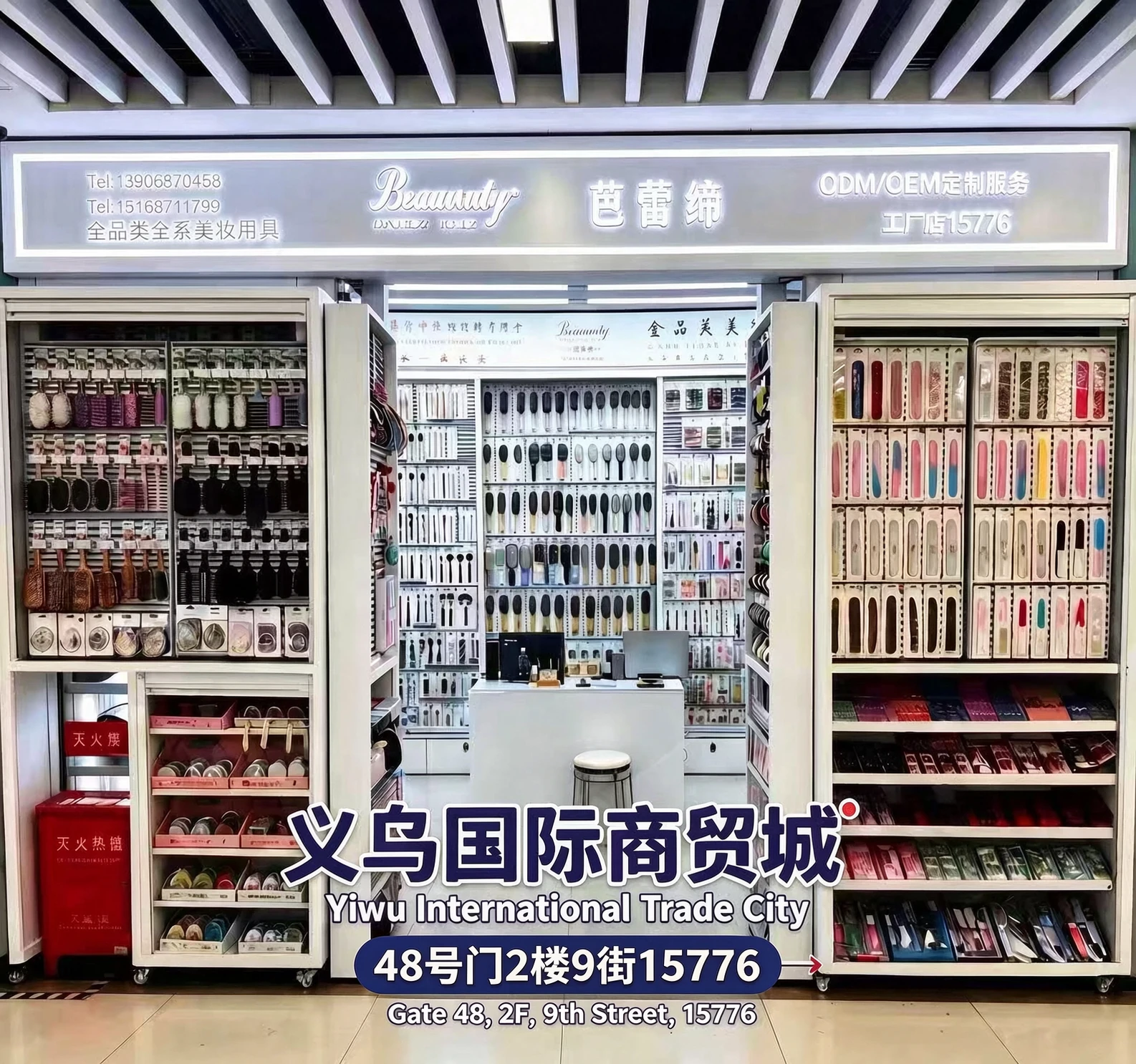
The catalogue lists YY-113201 as an eight-piece makeup brush set. YY-113009 is a five-piece reference pictured with a case and mirror. These are separate model records. Confirm the actual contents and whether the case and mirror are included in the quote before choosing a headline for the pack.
Assign a component number to each brush or grooming tool. Record its agreed name, head shape and the dimensions important to the packaging. A photograph can locate a component, while a supplier specification should identify its fibre and handle materials. Do not infer animal-hair, synthetic, vegan or hypoallergenic claims from appearance.
Decide what the displayed piece count includes
A pack labelled “five brushes” makes a different promise from “five pieces including a case”. Write the exact count and included objects in the brief before artwork begins. If two brush heads share one handle, state how that item is counted. The proposed rule should be easy for a receiving or retail team to reproduce.
| Field | Record | Check on the proof |
|---|---|---|
| Model and revision | SKU, sample identifier and accepted date | The proof uses the same reference |
| Counted components | Numbered tool list and quantity of each | Headline and contents text count the same objects |
| Accessories | Case, mirror or other item, if confirmed | Included accessories are distinguished from optional ones |
| Claims | Evidence and scope for each material or performance statement | No unsupported claim appears in small print or imagery |
Check a quantity example at both levels
For an illustrative order of 240 complete eight-piece sets, the listed tool count is 240 × 8 = 1,920 pieces. If the accepted packing plan specifies 24 complete sets per shipping carton, the order needs 10 cartons. The 24-set carton is an assumption for this example, not a published pack for YY-113201.
Keep “240 complete sets” on the purchase line. A receiving sheet that records only 1,920 loose pieces cannot establish that each of the 240 retail packs contains the right combination. Inspect against the agreed component list and preserve any mixed or incomplete packs as separate findings.
Review the artwork against the physical assembly
Check the product name, contents wording, model reference, barcode artwork supplied by the responsible business and any required information for the destination. Compare the displayed image with the selected set. Ask who supplies and approves each market-specific statement rather than adding a generic certification mark.
Use the final-size print proof or an agreed physical mock-up to check readable text, fold positions and space around the tools. A screen preview can show the layout; it does not confirm print colour, package fit or a production tolerance.
Recheck the affected record after a change
If a brush, case or pack layout changes, identify the new revision and repeat the related checks. Changing a handle colour may affect the product image; changing the tool count affects both the contents text and packing calculation. Keep old and new proofs with the decision so a later reorder can name the correct version.
Send the SKU, component record, proof revision, number of complete sets and destination through the inquiry page. This guide was prepared with AI assistance from catalogue records and proposed purchasing methods. It reports no independent material, safety or print testing.
Sources
- Beauuuty supplier catalogue2024 catalogue reference images and listed model details. Current quantities, specifications and terms require a written quote.
- Wholesale beauty tools buying guideExisting sourcing and inquiry preparation flow. The planning worksheets below are editorial suggestions, not test results.